If you're going through menopause, you've probably thought about hormone replacement therapy (HRT) to help manage your symptoms.
There are lots of options available, including tablets, patches, gels, sprays, and vaginal treatments, so it can be hard to know where to start.
But the best HRT for one person won't always be the best for someone else. Don't worry – your GP or pharmacist can help you find the right option for your body, your symptoms, and your health history.
Read on to explore each treatment in more detail and find out what might work for you.
Three key takeaways
No single HRT is best for everyone. The right treatment depends on your symptoms, whether you still have a womb, and your medical history.
HRT varies in what it contains, how you take it, and when you take it, and each of these can change how well it suits you.
Patches, gels, and sprays (transdermal HRT) don't raise your risk of blood clots in the way tablets can, so they're often a good fit for people with certain health conditions.
Best HRT treatments at a glance
Symptoms
Type of HRT that might suit you
Products
Hair loss
Transdermal oestrogen with micronised progesterone (if needed)
HRT treatments differ in three main ways: what they contain, how you take them, and when you take them. Knowing these differences can make it easier to talk through your options with your prescriber.
What they contain
Oestrogen-only HRT: This is usually prescribed if you’ve had your womb removed.
Combined HRT: Contains oestrogen and a progestogen. It's for people who still have a womb, because taking oestrogen on its own can thicken the womb lining and raise the risk of womb (endometrial) cancer. However, this is stillrare.
How it's taken
Transdermal HRT: This form of treatment goes in through your skin, via a patch, gel, or spray. Because the hormones bypass your liver, transdermal HRT doesn't raise your risk of blood clots in the way tablets can. It's often preferred for people with an increased risk of blood clots, those who are prone to migraines, or anyone who finds tablets hard to swallow.
Oral HRT: This is a tablet or capsule you typically take once a day. It's simple and convenient, but it carries a slightly higher risk of blood clots, though the overall risk still remains small.
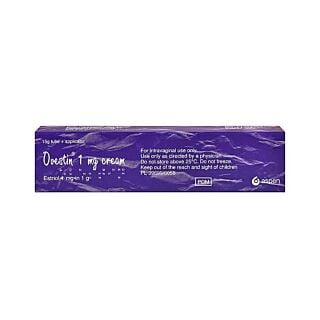
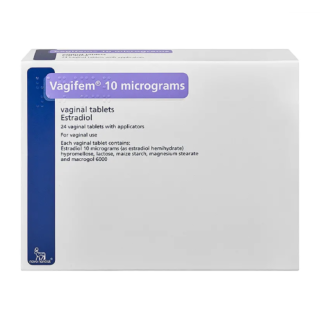
Vaginal HRT: A form of low-dose oestrogen that you put into your vagina as a cream, gel, pessary, tablet, or ring. It treats vaginal symptoms like dryness and pain during sex. Very little oestrogen is absorbed into your bloodstream, so low-dose vaginal oestrogen doesn’t carry the same risks as systemic HRT (which delivers hormones into your bloodstream). You don’t normally need a progestogen with it, even if you have a womb.
When it's taken
Cyclical or sequential HRT: This form of treatment mimics a natural monthly period and is usually offered if you have menopause symptoms and still have your cycle. You take oestrogen every day and typically a progestogen for 10-14 days of each 28-day cycle. You’ll then have a withdrawal bleed at the end of each course of progestogen.
Continuous combined HRT: This is recommended once you're postmenopausal, meaning you haven't had a period for one year. You take oestrogen and a progestogen every day without a break. If you started on cyclical HRT, your prescriber may move you onto continuous HRT later on.
Best HRT patches
There isn't a single best HRT patch. The right one depends on your needs, and the biggest factor is whether you still have a womb.
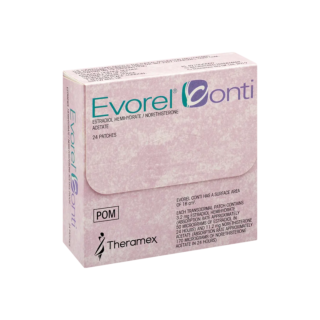
If you've had a hysterectomy, you'll usually be advised to use an oestrogen-only patch, like Evorel patches.
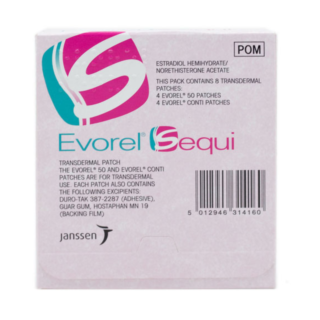
But if you still have a womb, you'll need a progestogen, too. That could be a combined patch like Evorel Sequi patches, or an oestrogen patch alongside a progestogen tablet or the Mirena coil.
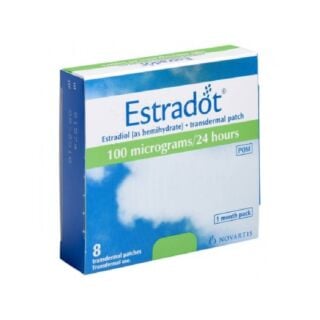
Patches release a steady amount of hormone(s) through your skin, and you change them every few days, depending on the brand. They're a good choice if you don't want to take a tablet every day, and they don't raise your risk of blood clots.
However, some people find patches don't stick very well or cause redness and irritation. Putting them on clean, dry skin with no moisturiser and peeling them off slowly can help.
“HRT may help some people when hair changes are linked to menopause, but it isn’t a specific or guaranteed treatment for hair loss.
“As some types of HRT include a progestogen, it’s worth noting that different progestogens have different side effects, with some potentially influencing hair thinning.
“Always tell your prescriber if your hair loss is worrying you. They can factor this in alongside your other symptoms and medical history when recommending treatment.”
Joint pain can happen during menopause, with some people finding that it improves when HRT treats their wider menopause symptoms. However, there isn’t one type of HRT that’s proven to work best for joint pain.
It’s important to remember that joint pain can have other causes, including arthritis or an injury. Always speak to your GP if it’s persistent, severe, or getting worse.
Best HRT for migraine sufferers
“If you suffer from migraines, transdermal HRT is normally the preferred choice. It gives you a steadier level of oestrogen than tablets, and changes in hormone levels can trigger migraines.
“Where a progestogen is needed, a continuous regimen may sometimes help ,minimise your hormonal fluctuations. Howeverm the most suitable regimen depends on whether you're perimenopausal or postmenopausal.
“Having migraines with aura doesn't usually rule out transdermal HRT, but always tell your prescriber about your migraines so they can find the safest option for you.”
Hanna Yusuf, Prescribing Pharmacist at Chemist4U
Best HRT for skin
Declining oestrogen levels can cause drier, thinner, and more sensitive skin during menopause.
HRT may improve some of these skin changes when it’s prescribed to treat general menopause symptoms, but it isn’t normally prescribed for skin concerns alone.
If patches are causing you irritation, your prescriber may discuss another option, like a gel, spray, or tablet.
Best HRT for anxiety
“Hormone shifts during menopause can cause mood changes, including anxiety and low mood.
“If these symptoms started around the same time as your other symptoms, HRT may help some people by treating the menopause symptoms contributing to them.
“However, HRT isn’t a standalone treatment for anxiety or depression. Talking therapies, including cognitive behavioural therapy (CBT), may also help. Make sure you speak to your GP if anxiety or low mood is affecting your daily life.”
Hanna Yusuf, Prescribing Pharmacist at Chemist4U
Best HRT for vaginal dryness
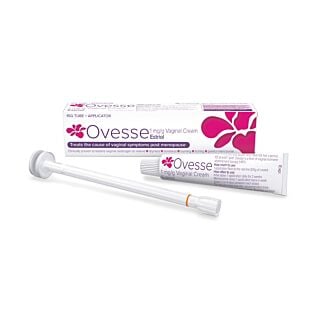
Low-dose vaginal oestrogen is usually the best option for vaginal dryness. It comes as a cream, gel, pessary, vaginal tablet, or ring, and it works right where you need it to ease dryness, burning, and pain during sex.
Only small amounts of oestrogen are absorbed into your bloodstream, so it doesn’t carry the same risks as systemic HRT. You don’t normally need a progestogen with it, and it can be used long-term if it continues to help.
It won't help with other symptoms like hot flushes, though, so some people use it alongside other forms of HRT.
Finding the right HRT can take time, and you don't have to work it out on your own. Our team of expert clinicians are here to help you find a treatment that suits your symptoms, your health, and your lifestyle.
Simply complete a quick online consultation about your symptoms and medical history, and our prescribers will check to make sure that treatment's safe and suitable for you. If it's approved, we'll send it to your door in discreet packaging.
Not sure which HRT to choose? Our pharmacists are happy to talk through your options, side effects, switching treatments, or how to use your HRT.
Which hormone replacement therapy has the fewest side effects?
No type of HRT is completely free of side effects, and the best option depends on which symptoms need treating. For example, transdermal HRT doesn’t increase the risk of blood clots in the way tablets can.
Additionally, low-dose vaginal oestrogen has very little absorption into the bloodstream, but it only treats vaginal symptoms. Always speak to your healthcare provider for advice if you’re concerned about the side effects of HRT.
Which HRT is most effective?
No single HRT works best for everyone. How well a treatment works for you depends on your symptoms, your body, and how you respond to it.
Tablets, patches, gels, and sprays can all ease symptoms like hot flushes and night sweats, while vaginal oestrogen works best for vaginal symptoms.
It can take a few months to feel the full benefits, and your prescriber may need to adjust your dose or type along the way.
Where's the best location for an HRT patch?
You should put your HRT patch on clean, dry skin below your waist, like your bottom or lower tummy. Don't put it on or near your breasts.
Use a different spot each time you change it to avoid irritation, and avoid areas where your clothes might rub it off. Always check the patient information leaflet for your patch, as advice can vary slightly between brands.
Chemist 4 U uses cookies (and other techniques) to enhance your shopping experience.
Read more about our cookie policy, terms and conditions and privacy statement. By continuing on this site and accepting our cookies you agree to the collection of information on this basis by us and by third parties on the platform as well as direct email marketing. Please customise your cookie settings below.
Find out more about our data policies.