Some people believe that finasteride lowers testosterone because of how it tackles hair loss. But this isn’t true!
In fact, finasteride actually causes a slight increase in testosterone levels when used to treat male pattern baldness.
Let’s take a deeper look at the relationship between finasteride and testosterone, and some of the other myths that surround the two.
Three key takeaways
Finasteride treats male pattern baldness by blocking a hormone called dihydrotestosterone (DHT) from being converted from testosterone in the body.
When testosterone is converted to DHT due to taking finasteride, total testosterone levels in the body increase.
Taking finasteride doesn’t decrease your muscle mass.
Testosterone vs DHT
Male pattern baldness is caused by a hormone called DHT.
Your body makes DHT from testosterone using an enzyme called 5-alpha reductase. DHT is produced in the skin, mainly in the hair follicles and the prostate.
However, it isn’t the levels of DHT in the body that trigger hair loss, it’s your genetic sensitivity to it. Although if you do have a genetic sensitivity to DHT, higher levels of the hormone will typically cause greater hair loss.
If you take finasteride to treat your male pattern baldness, it reduces your hair loss by blocking 5-alpha reductase from creating DHT, not by reducing testosterone.
Finasteride affects your testosterone levels because of its effect upon DHT.
Short-term impact
By blocking testosterone from converting to DHT, finasteride reduces your levels of DHT. And because less testosterone is converting to DHT, this means more of it remains in your body in its original form.
So, it’s likely you’ll actually have higher levels of testosterone in your body when taking finasteride, not less.
Long-term impact
The impact of finasteride on testosterone appears to stay the same in the long as well as the short term.
In some very rare cases, men who’ve taken finasteride may develop post-finasteride syndrome, symptoms of which include:
physical issues like joint pain, fatigue, and muscle weakness
changes to your appearance, like weight gain
sexual problems like reduced sensation in the genitals, ED, reduced sex drive, and difficulty orgasming
mental health and cognitive changes like depression, anxiety, or trouble focusing
neurological symptoms like tingling and tremors, or issues with coordination
Myths about finasteride and testosterone
The main myth around finasteride and its relationship to testosterone is that taking finasteride can cause testosterone levels to drop.
But there’s a another myth: the idea that finasteride can also decrease your muscle mass. This likely stems from the belief that finasteride lowers testosterone, because testosterone is linked to muscle mass.
However, since finasteride doesn’t lower testosterone, but can slightly raise it, taking finasteride won’t affect your ability to build muscle.
“A lot of people think that finasteride lowers testosterone because of the effect it has in lowering DHT. Given that the ‘T’ in DHT is for ‘testosterone’, it’s understandable that people get this confused. But the good news is that taking finasteride won’t lower your total or free testosterone and therefore won’t interfere with your ability to build or maintain muscle mass, for which testosterone is essential.”
If you’re looking for alternatives to finasteride to treat hair loss, there are other options available:
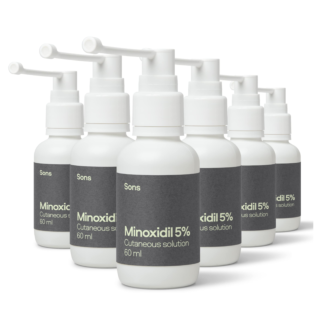
Minoxidil
It’ though that minoxidil works by widening your blood vessels to improve blood flow to your scalp, which stimulates your follicles to regrow hair.
Minoxidil has been around for decades and has been extensively studied. It’s proven to be both safe and highly effective at reducing and reversing hair loss.
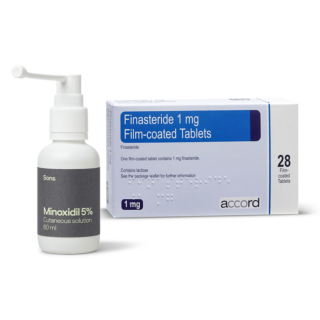
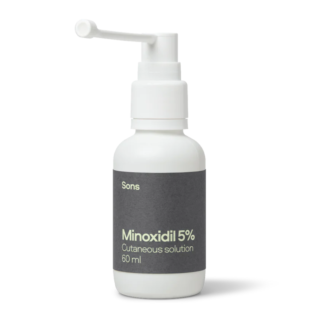
It’s available in two forms: oral and topical minoxidil. Topical minoxidil typically comes in the form of a spray or foam that you apply morning and evening and is widely available over the counter.
In comparison, oral minoxidil comes in pill form and is prescription-only. Its use as a hair loss treatment is ‘off-label’,meaning it’s been prescribed for a different condition to the one it’s licenced to treat.
Caffeine shampooscontain active ingredients like proteins and caffeine which help stimulate blood flow to the scalp.
While there’s no large-scale scientific evidence that caffeine shampoos work, they can still potentially help strengthen your hair to prevent further loss.
Frequently asked questions about finasteride and testosterone
Does finasteride affect muscle growth?
No, finasteride does not affect muscle growth. There’s a mistaken belief that finasteride can lower testosterone, which could affect muscle growth, but this is a myth.
Does finasteride make you less masculine?
Finasteride will not lower your testosterone, or affect muscle growth. .
Do DHT blockers lower testosterone?
No, DHT blockers do not lower testosterone. In fact, the effects of DHT blockers, which are to prevent testosterone from being converted to DHT in the body, can raise total testosterone levels.
Chemist 4 U uses cookies (and other techniques) to enhance your shopping experience.
Read more about our cookie policy, terms and conditions and privacy statement. By continuing on this site and accepting our cookies you agree to the collection of information on this basis by us and by third parties on the platform as well as direct email marketing. Please customise your cookie settings below.
Find out more about our data policies.