Your period can be a pain in more ways than one. But you don’t have to live with the inconvenience. Whether it’s for a holiday, a special occasion, or an important exam or competition, you can delay your period and avoid the symptoms that come along with it.
From period delay medication and birth control, to whether it’s possible to delay it naturally, let's go through how you can delay your period safely.
Three key takeaways
Delaying your period is safe, as long as you’ve spoken to a healthcare professional first, and you use approved methods like norethisterone or hormonal contraception like the combined pill.
There’s no way to delay your period naturally that’s healthy or safe.
Period delay medication (like norethisterone) won’t prevent you from getting pregnant, so you still need to use contraception.
Is delaying your period safe?
Delaying or skipping your period is perfectly safe, as long as you do it the right way. Periods aren’t medically necessary every single month, and there’s no health benefit to having a period (unless, of course, you’re trying to get pregnant).
The important thing is to use approved methods and speak to a healthcare professional first, like one of our prescribers. They can help you choose the right option based on your individual circumstances.
Predicting when your period arrives, which is especially helpful if they’re irregular (can be caused by conditions like PCOS).
How to delay your period medically
If you want to delay your period, there are a few medications that can help. Norethisterone is the main one prescribed specifically for period delay, but depending on your situation, other options might work better for you.
We’ll go through each one below so you can see what’s available.
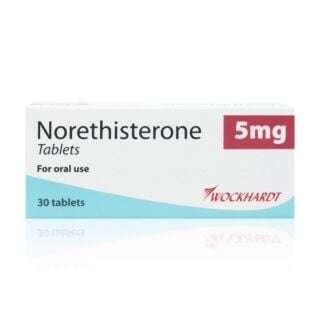
Norethisterone
Norethisterone contains a synthetic version of progesterone (a hormone that’s already naturally produced by your body) and is the most commonly prescribed medication specifically for delaying your period.
It works by keeping your progesterone levels stable, which prevents the lining of your womb from shedding and a period from starting.
To use it, start taking it three days before your period is due (one tablet, three times per day). You can take norethisterone for three to four weeks, depending on how long you need to delay your period for. Your period will typically start two to three days after taking your last tablet.
When taken correctly, norethisterone is very effective at delaying your period. However, it’s not a contraceptive, meaning it won’t protect you against pregnancy.
Medroxyprogesterone is another synthetic progesterone tablet that can be used to delay your period. However, it’s prescribed off-label for this purpose (meaning it can be prescribed for something other than its original purpose).
It works in a similar way to norethisterone by maintaining your progesterone levels to prevent your period from starting. Medroxyprogesterone may prevent ovulation, so fertility can be affected. The time it takes for fertility to return to normal can vary.
It’s important to note that medroxyprogesterone is usually only prescribed when norethisterone is not a suitable choice. It’s usually reserved for those who have a slightly higher risk of blood clots, like those with a BMI of 30 or above or those who are over 35 and smoke.
Provera
Another option is Provera, which is the brand name for medroxyprogesterone and works in exactly the same way. Like medroxyprogesterone, it’s also prescribed off-label for period delay.
Contraceptive pill
If you’re already taking the combined contraceptive pill, you can use it to delay your period by skipping the usual seven-day break between packets, but it’s always best to check with your prescriber beforehand.
This keeps your hormone levels consistently high, which stops the lining of your womb from shedding, successfully postponing your period.
“To delay your period with the pill, you need to have been regularly taking it for several weeks already. You can’t start taking it a few days before your period is due, as it won’t work.
“Most combined pills can be taken back-to-back, including, but not limited to, Microgynon, Rigevidon, and Yasmin. However, phasic pills contain different hormone levels in each pill, so speak to your prescriber before taking more than one packet in a row.
“The mini pill can’t be used to delay your period. It’s taken every single day without breaks, so there’s no way to control your cycle like you can with the combined pill. Some people also find that their periods become irregular on the mini pill, making it difficult to predict when they will arrive.”
The vaginal ring and contraceptive patch work similarly to the combined pill, meaning they can be used to delay your period. You can skip the usual break and use them continuously, though breakthrough bleeding can still happen.
The contraceptive implant, a small rod inserted into your upper arm, commonly stops periods, too, though this varies from person to person, and periods will return once it’s removed.
While these other contraceptive methods can sometimes be helpful in delaying your period, they’re not designed specifically for period delay, and the results can be unpredictable.
Do period delay tablets prevent pregnancy?
No, period delay tablets like norethisterone and medroxyprogesterone don’t prevent pregnancy. If you’re sexually active while taking them, you’ll need to use additional contraception, like condoms.
The combined contraceptive pill is different because it’s designed to prevent pregnancy, and its ability to delay your period is an added bonus.
You might have come across various home remedies that claim to delay your period naturally, but unfortunately, there’s no scientific evidence to support any of them.
Some common myths to delay your period include:
drinking lemon juice or lemon water
taking apple cider vinegar
drinking salt water
having raspberry leaf tea
eating pineapple or drinking pineapple juice
taking ibuprofen
“Extreme dieting or very intense exercise can stop periods, but not in a healthy way. This happens because your body is under stress and doesn't have the resources it needs to prioritise your periods over other important functions.
“If your periods stop for these reasons, it’s your body’s way of telling you to slow down and prioritise your health. Having natural periods is a sign that your body’s functioning as it should be.
“For a reliable and safe way to delay your period, medications like norethisterone and the combined contraceptive pill are your best choice.”
Claire Irwin, Prescribing Pharmacist at Chemist4U
Can you delay your period too often?
Medication like norethisterone is licensed for delaying your period in the short-term for specific events or occasions. If you want to delay your period regularly (for example, you struggle with heavy, painful periods or endometriosis), the combined pill might be a better option.
But always speak to your prescriber for advice on your individual circumstances.
How Chemist4U can help with period delay
If you’re looking to delay your period for an upcoming holiday or event, we’re here to make it simple and convenient.
All you need to do is complete a short online consultation about your health and lifestyle, and if our clinicians are happy the medication is suitable for you, we'll deliver your prescription discreetly to your door.
Ready to delay your period? Start your consultation below.
Stress can delay your period by disrupting the hormones that control your cycle. When you’re stressed, your body goes into ‘fight or flight’ mode, which can interfere with ovulation and cause your period to arrive late.
Can antibiotics delay your period?
Antibiotics usually don’t delay your period. However, they can affect how well some contraceptives work.
Can a bladder infection delay your period?
A bladder infection, or cystitis, doesn’t directly delay your period. However, any illness that puts stress on your body can potentially affect your cycle.
Can diet and exercise delay your period?
Having a normal, healthy diet won’t delay your period. Only extreme calorie restriction or excessive exercise can stop periods, but this happens because your body is under stress and doesn’t have enough energy to function properly.
Can alcohol delay your period?
Sometimes, alcohol can impact the timing and flow of your period, in addition to how severe your symptoms are during your period.
Can you get pregnant if you delay your period?
Period delay tablets like norethisterone don't provide contraception, so you can still get pregnant. Use additional protection like condoms if you're sexually active.
Is it safe to take the contraceptive pill continuously for period delay?
It’s usually safe for most people to take the contraceptive pill continuously to delay their period, but it’s always best to do so under medical guidance.
Does the morning after pill work for period delay?
No, emergency contraception is designed to prevent pregnancy after unprotected sex, not to manage your cycle. While it might affect when your next period arrives (making it earlier or later than expected), this is unpredictable and shouldn't be relied on for intentionally delaying your period.
Chemist 4 U uses cookies (and other techniques) to enhance your shopping experience.
Read more about our cookie policy, terms and conditions and privacy statement. By continuing on this site and accepting our cookies you agree to the collection of information on this basis by us and by third parties on the platform as well as direct email marketing. Please customise your cookie settings below.
Find out more about our data policies.