If you’re experiencing severe nausea during pregnancy, you’ll know just how much it can turn your world upside down.
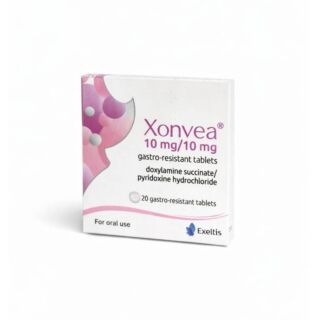
So, it should come as welcome news that the anti-sickness medication Xonvea is now available in the UK. This gives hope to thousands of people to finally have the pregnancy experience they deserve.
Like any medication you take during pregnancy, it’s completely natural to wonder how safe it is for your baby. That’s why we’ve compiled this guide all about Xonvea’s safety so you can make an informed decision about whether it’s the right choice for you.
Three key takeaways
Studies show that Xonvea is safe during pregnancy. There’s no evidence of it linking to birth defects, miscarriages and stillborn rates, or premature birth.
83% of people found Xonvea effective at treating nausea and vomiting during pregnancy, with a further 87% saying it worked better than any other anti-sickness medication they’d tried.
Access to Xonvea is a postcode lottery, with different NHS trusts and GPs having different prescribing criteria despite Xonvea being a first-line treatment.
Have studies shown Xonvea is safe in pregnancy?
Yes, multiple studies conducted by the NCBI have found Xonvea to be safe in pregnancy. It contains doxylamine and vitamin B6 (pyridoxine), a combination of ingredients that’s been studied extensively over the years.
How effective is Xonvea at treating morning sickness?
Xonvea is very effective at treating sickness during pregnancy. Research by Pregnancy Sickness Support showed that 83% of people found Xonvea effective at managing their symptoms.
Only 11% said it didn’t work for them, and the remaining 6% were unsure (which might be down to factors like taking multiple medications or not using it long enough to see results).
But what’s interesting is that of the people who tried Xonvea, a striking 87% said it worked better than any other anti-sickness medication they’d tried. This suggests that Xonvea could be worth considering earlier on in your pregnancy rather than as a last resort.
Of course, it’s important to note that everyone’s different and what works great for one person might not be the answer for another. And there are some side effects of Xonvea to be aware of.
Xonvea is a delayed-release tablet, meaning it doesn’t work instantly. Each tablet has a special coating that allows it to work overnight while you sleep, with symptoms typically improving the day after taking your first dose. This is because the medication reaches its peak levels in your blood around 5.5 to 7.5 hours after you take it.
If suitable, your prescriber will likely start you on a gradual approach, which could look something like this:
Day one: you’ll take two Xonvea tablets at bedtime.
Day two: hopefully, you’ll start to feel better, and if your symptoms are under control, you’ll stick with those two tablets every night before bed.
Day three: if you’re still struggling with symptoms, your prescriber may suggest taking an additional tablet in the morning alongside your two at night.
Day four: if you still don’t feel any better, they may suggest taking one tablet in the morning, one mid-afternoon, and two at bedtime.
Why access to Xonvea matters
“Accessing Xonvea on the NHS is something of a postcode lottery. Different NHS trusts and GPs have different prescribing criteria, meaning some people can’t access the medication they desperately need.
“What makes this even more shocking is that Xonvea is a recommended first-line treatment for nausea and vomiting in pregnancy, meaning it is safe and effective to use.
“It’s why it is so important to make Xonvea more readily available. With greater access, we can prevent the devastating impact pregnancy sickness can have on so many people’s lives.”
Our team of specialist clinicians understand the impact of nausea and vomiting during pregnancy, and they can assess whether Xonvea is the right option for you.
Simply complete an online consultation where you’ll answer some questions about your symptoms, medical history, and how it’s affecting your daily life.
If Xonvea is suitable for you, our clinicians can prescribe it and arrange for it to be delivered straight to your door, discreetly and with care.
We know that when you’re struggling with severe nausea and vomiting, the thought of leaving the house can feel impossible. That’s why we make it easy for you to access treatment from the comfort of your own home: no GP appointments and no waiting rooms.
Our team is available for ongoing support, too. If you’ve got questions about your dosing, any side effects, or if you’re unsure whether Xonvea is working as well as it should, we’re here to help you every step of the way.
We’re unable to prescribe Xonvea for hyperemesis gravidarum due to it requiring close medical supervision that we’re unable to provide online. This is for your safety.
If your symptoms are severe, you may need hospital care, including IV fluids or injectable anti-sickness medication, which requires in-person monitoring. Please contact your GP, midwife, or attend A&E if you’re struggling with hyperemesis gravidarum.
Chemist 4 U uses cookies (and other techniques) to enhance your shopping experience.
Read more about our cookie policy, terms and conditions and privacy statement. By continuing on this site and accepting our cookies you agree to the collection of information on this basis by us and by third parties on the platform as well as direct email marketing. Please customise your cookie settings below.
Find out more about our data policies.