If hair loss runs in your family, you might be at risk of male pattern baldness (androgenetic alopecia). It’s so common that up to 50% can be affected by it by the time they are 50.
Below, we cover the early of male pattern baldness symptoms, how it’s diagnosed and the potential treatments we can help you access.
Three key takeaways
Male pattern baldness is caused by genetic, hormonal, and environmental factors.
Symptoms typically begin in your 30s (sometimes earlier) with thinning at the crown, temples, or a receding hairline.
While most people notice the early stages of male pattern baldness in their 30s, you may see hair loss as early as your late teenage years or early 20s.
Symptoms of male pattern baldness include:
hair thinning or loss on your crown (this usually appears in a circular shape)
There are stages of male pattern hair loss, which differ slightly from the signs of female pattern baldness. This is known as the Hamilton-Norwood Scale.
The Norwood Scale is a widely used tool for diagnosing and discussing male pattern baldness. It offers a clear reference for identifying the stage of hair loss and exploring treatment options.
Stage 1
In stage one of the Norwood Scale, there is no noticeable thinning or receding of the hairline, nor is there any signs of hair loss. This is known as the control stage.
Stage 2
During stage two, you may notice slight recession of the hairline, especially around your temple. This is sometimes referred to as an adult or mature hairline.
Stage 3
Stage three is classified as the first stage of balding. The receding hairline becomes more severe, taking on the shape of an ‘M’, a ‘U’ or a ‘V’. There is more noticeable thinning at the crown of the head.
Stage 3 vertex
This is a variation of stage three, where the hair remains at stage two, but hair thinning and loss remains on the top of the scalp, known as the vertex.
Stage 4
The hairline recession in stage four is more severe than in stage two, with there being little to no hair on the vertex. The two areas of hair loss are connected by a strip of hair between the receding hairline and the bald spot.
Stage 5
The two areas of hair loss are larger than in stage four. The connecting strip of hair is now narrower and sparser.
Stage 6
The balding areas at the temple are now joined with the balding area on the vertex. The band of hair across the top of the head is now gone.
Stage 7
This is the most severe stage of hair loss. There is now only a band of hair going around the sides of the head. The hair is usually not dense and may be fine.
Norwood class A
This is a variation of the scale in which the hairline recedes back uniformly, with no island of hair in the middle. You don’t get a bald spot in the vertex, instead, your hairline recedes directly from front to back.
“The first step in getting a diagnosis for male pattern baldness, is going to your healthcare provider and discussing your concerns.
“From this point, they may use tools like the Norwood Scale to assess severity when they’re doing a visual examination of your hair. They may look for a receding hairline and thinning hair.
“They will also look at your medical history, to see if you have any underlying medical conditions or are taking any medication that may be causing your hair to fall out. They may discuss your family history to see if it could be hereditary.
“Another investigation they may perform is a hair pull test. This could help them determine other possible causes of your hair loss, like telogen effluvium.”
Living with baldness is perfectly fine, and for some people it is seen as a natural process that happens. However, for those who do wish to prevent their hair loss and do want to seek treatment, then there are options available for you.
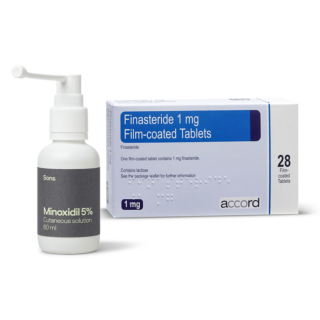
Finasteride
Finasteride is the generic version of the brand Propecia and is one of two clinically approved medications used to stop hair loss in men. It’s best used to treat hereditary hair loss.
When treating hair loss, finasteride works by reducing the production the hormone (DHT), that is responsible for shrinking hair follicles.
Before using the medication, it’s a good idea to read up on any potential finasteride side effects, so that you have everything necessary to make the most informed decision.
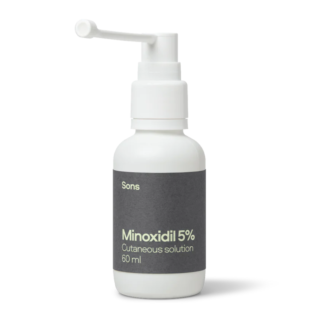
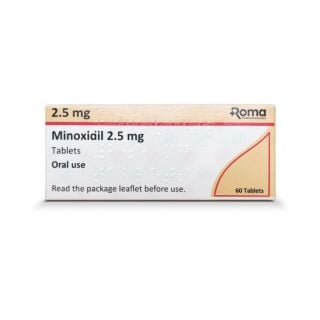
Minoxidil comes in two main forms, a topical solution that comes as a spray, foam or liquid or minoxidil tablets (these are an off-label treatment only for men).
When treating hair loss, it is thought that minoxidil works by stimulating your hair follicles and improving blood flow to the scalp.
If you’re unsure which is best for you, we’ve directly compared finasteride and minoxidil so that you’ve got all the information in front of you.
Hair transplants offer a surgical solution for male pattern baldness by relocating healthy hair follicles from donor areas (typically the back and sides of the scalp) to balding or thinning areas. This is a permanent treatment option that can provide natural-looking results.
It's important to note that hair transplants can be costly and require careful consideration. The procedure should be performed by a qualified professional, and you may need multiple sessions depending on the extent of hair loss.
How our expert team of clinicians can help with male pattern baldness
If you have decided that you want to start treating your male pattern baldness, then you can complete a consultation. Our clinicians will check this through and look at your medical record if available. They will contact you if there is anything else they need to know. helping you make an informed decision regarding your treatment
We offer a quick and discreet delivery service, so that if you’re not quite comfortable going out and seeing someone face-to-face, or don’t want people to know that you’ve started treatment, we are here to help.
Frequently asked questions about male pattern baldness
Can male pattern baldness be stopped if caught early?
If you notice male pattern baldness in an early stage, and start using treatments like finasteride and minoxidil, you can prevent further hair loss and even encourage regrowth of hair.
At what age do men start balding?
Most men tend to start balding in their early 30s, but this is just an average. For some it can come much later, while for others it can begin in your late teens and early 20s.
Chemist 4 U uses cookies (and other techniques) to enhance your shopping experience.
Read more about our cookie policy, terms and conditions and privacy statement. By continuing on this site and accepting our cookies you agree to the collection of information on this basis by us and by third parties on the platform as well as direct email marketing. Please customise your cookie settings below.
Find out more about our data policies.