
1 Inhaler



What is a salbutamol inhaler?
A salbutamol inhaler is a fast-acting reliever treatment used to ease symptoms of asthma and other airway conditions like chronic obstructive pulmonary disease (COPD). It works quickly to open the airways, helping you breathe more easily during episodes of wheezing, shortness of breath, or chest tightness.
It's most commonly used as a reliever inhaler, meaning it's taken when symptoms occur rather than on a fixed daily schedule.
What’s the difference between an inhaler and an EasyHaler?
Inhaler is a general term for devices used to deliver medication to the lungs. There are different types, including:
- Pressurised metered-dose inhalers (pMDIs): these release a spray when pressed.
- Dry powder inhalers (like EasyHaler): these release medication when you inhale. EasyHalers don’t require coordination between pressing and breathing in, which some people find easier to use.
This product is a pMDI. However, we also provide a salbutamol EasyHaler is this device is more suited to your needs.
How does salbutamol work?
A salbutamol inhaler is a bronchodilator inhaler that delivers salbutamol directly into the lungs. Each dose typically contains 100 micrograms of medication, with around 200 doses per inhaler.
Salbutamol is one of the most widely used treatments for asthma symptom relief and belongs to a group of medicines called short-acting beta-2 agonists (SABAs).
It works by relaxing the muscles around the airways, causing them to widen. This improves airflow and relieves symptoms like:
- wheezing
- shortness of breath
- chest tightness
Because of how quickly salbutamol works, it can be used for both immediate relief as well as preventing symptoms brought on by exercise.
How to use your salbutamol inhaler
Using your inhaler correctly ensures the medication reaches your lungs effectively, providing your with faster relief.
When using your salbutamol inhaler:
- Shake the inhaler well.
- Breathe out gently.
- Place the mouthpiece between your lips.
- Press the inhaler while breathing in slowly.
- Hold your breath for a few seconds.
Your healthcare provider may recommend using a spacer device to improve delivery.
Salbutamol inhaler dosage for adults
You should always follow your prescribed dosage.
The typical dosage for a salbutamol inhaler is:
- 1–2 puffs as needed for symptom relief.
- May be used before exercise if advised.
If you need to use your inhaler more frequently than usual, this may indicate your condition is not well controlled.
How to clean your inhaler
To maintain a clean and effective inhaler:
- Remove the canister from the plastic casing.
- Rinse the plastic casing in warm water.
- Allow to dry fully before reassembling.
Regular cleaning helps prevent blockage.
How effective is a salbutamol inhaler?
Salbutamol inhalers are considered highly effective for rapid symptom relief when used correctly.
Clinical guidance shows that salbutamol provides quick bronchodilation, which helps improve your breathing within minutes. However, this effectiveness depends on:
- correct inhaler technique
- sticking to your prescriber’s guidance
- your overall asthma management
If symptoms persist despite use, you may need to review your treatment with a clinician.
Salbutamol side effects
Like all medicines, salbutamol can cause side effects, although not everyone will experience them.
Common side effects:
- trembling or shaking
- headache
- increased heart rate
Less common side effects:
- muscle cramps
- palpitations
- restlessness
These effects are usually mild and short-lived.
When to seek medical help
Seek medical advice if you experience:
- severe or worsening breathing symptoms
- chest pain or irregular heartbeat
- signs of an allergic reaction
- reduced effectiveness of your inhaler
If you need to frequently use your inhaler, it may indicate that your asthma isn’t under control, and that you should speak to your clinician.
When not to use a salbutamol inhaler
Salbutamol may not be suitable if you:
- are allergic to salbutamol or any ingredients
- have certain heart conditions
- have been advised against beta-agonist medicines
Always consult a healthcare professional if unsure.
Salbutamol contraindications
Salbutamol should be used with caution in people with:
- cardiovascular conditions
- hyperthyroidism
- diabetes
Your prescriber will assess whether it's appropriate for you.
How to order your salbutamol inhaler with Chemist4U
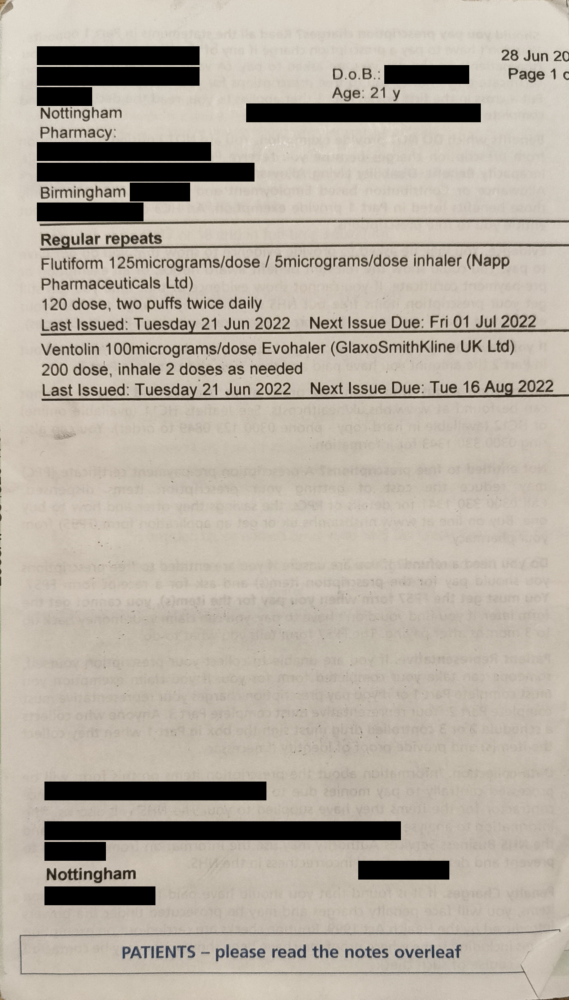
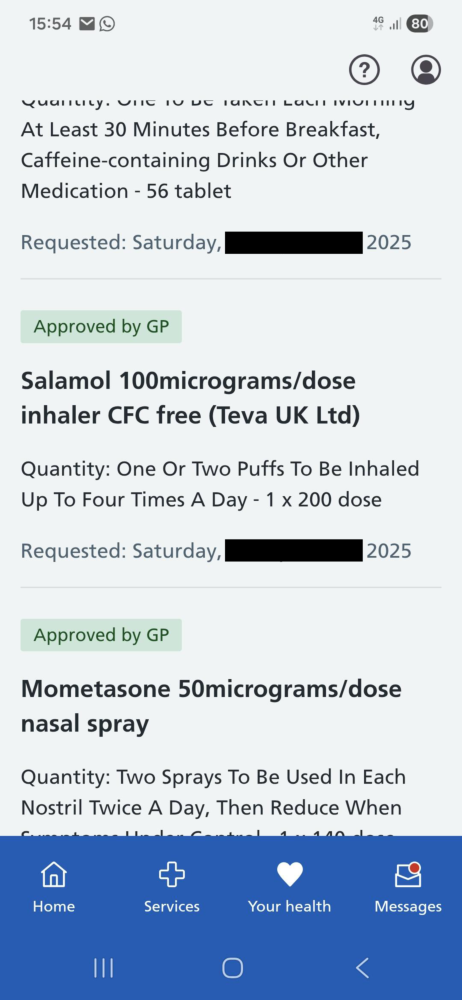
If we cannot access your NHS Summary care record, we will need a photo or screenshot of your medication. We need evidence that you are prescribed this treatment regularly on repeat. You can see examples of acceptable evidence below.
To order:
- Upload proof of your prescription during checkout.
- Your details will be reviewed by a registered pharmacy team.
- Once approved, your medication will be dispensed and delivered.
If we cannot access your NHS Summary care record, we will need a photo or screenshot of your medication. We need evidence that you are prescribed this treatment regularly on repeat. You can see examples of acceptable evidence below.
Photo of a paper prescription
You can upload a clear photo of your prescription. Ensure:
- all details are visible
- the prescription is valid and in date
Screenshot of NHS/Patient Access app
Alternatively, provide a screenshot from your NHS or Patient Access app showing your current prescription.
This ensures a safe and regulated supply.
Storage information
- Do not store above 25-30°C.
- Protect from excessive or direct heat and sunlight.
- Do not puncture or burn the canister.
- Keep out of sight and reach of children.
Alternatives to a salbutamol inhaler
If salbutamol is not suitable, you could consider:
- other reliever inhalers containing bronchodilators
- combination inhalers (e.g. preventer + reliever)
- long-term preventer inhalers (corticosteroids)
When it comes to managing your asthma, it’s a good idea to:
- avoid your known asthma triggers
- use a spacer device
- follow an asthma action plan
- Undergo regular asthma reviews with your clinician
Salamol vs salbutamol
Salamol is a brand of salbutamol inhaler. Both contain the same active ingredient and work in the same way, but may differ in device design and propellant.
Frequently asked questions about salbutamol inhalers
Is salbutamol a steroid?
No, salbutamol is not a steroid. It's a bronchodilator that works by relaxing the airways.
Is Ventolin the same as salbutamol?
Ventolin is a brand name for salbutamol. The active ingredient is the same.
Can you use Fostair and salbutamol together?
Fostair is a preventer inhaler, while salbutamol is a reliever. They are often used together as part of an asthma management plan, but only as prescribed.
Sources
- Asthma. NHS. [Accessed 12 May 2026].
- Salbutamol. NHS. [Accessed 12 May 2026].
- Salbutamol Inhaler PIL. Electronic Medicines Compendium. [Accessed 12 May 2026].
- Asthma: diagnosis, monitoring and chronic asthma management. National Institute for Health and Care Excellence. Available at: https://www.nice.org.uk/guidance/ng80 [Accessed 12 May 2026].
- Asthma. NICE Clinical Knowledge Summaries. [Accessed 12 May 2026].



Find similar products
Can children use a salbutamol inhaler?
Children of all ages can use a salbutamol inhaler, although changes may need to be made to doses taken by young children and babies.
Children may find it difficult to use a Ventolin inhaler, so your doctor may suggest using a spacer to help them get the dose that they need.
What different types of inhalers are available?
There are three different types of inhalers, reliever inhalers, preventer inhalers, and combination inhalers.
- Reliever inhalers - These are your blue inhalers and they’re given to people with asthma or COPD to relieve symptoms. They’re usually used a few times a week, depending on what your doctor recommends.
- Preventer inhalers - These are your brown inhalers and they’re given to people who need to use reliever inhalers often. They help to reduce inflammation and sensitivity in your airways by using a steroid and are used every day to help reduce your symptoms.
- Combination inhalers - These are given to people who find that the combination of reliever and preventer inhalers isn’t enough to control their asthma symptoms. They can be different colours, depending on the inhaler you need. They’re used every day to prevent your symptoms and can be used again if you get symptoms during the day.
Do I need a prescription for this medication?
You do need a prescription for this medication in the UK.
Our healthcare professionals can provide prescriptions if they think this treatment would be right for you and your condition.
When you click the button which reads “Start Consultation” at the top of this page, you’ll see a short questionnaire set up by our healthcare team which is designed to help them understand your medical needs.
Just like an in-person consultation with your GP, our doctors will assess your answers to their questions and write a prescription for the treatment they think will be best for you.
You’ll then be able to pay for your medication and we’ll send it out to you quickly and in discreet packaging.